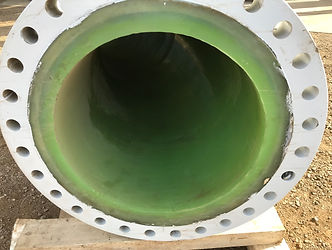
Rubber Liner for Mining: Soft Materials for Tough Environments
Mining operations are tough on equipment, but not all wear solutions perform equally. Certain rubber materials have been specifically engineered to withstand harsh mining environments. Through elastic deformation, rubber absorbs particle impact forces, while certain formulations provide strong cut and tear resistance for large, angular particles.
Advantages
• Absorbs impact through elastic deformation
• Strong resistance to abrasion, cutting, and tearing
• Suitable for tailings, slurry, and recycled water systems
• Thickness up to 4 inches for extended durability
• Performance comparable to steel, ceramics, and white cast irons under specific operating conditions.

Applications & Considerations
Neoprene and polyurethane are widely used in oil sands and mineral mining due to their excellent wear resistance. Their performance depends on proper material selection and compatibility with process media. Key factors include hydrocarbon-induced swelling, water diffusion (cold wall effect), and bond strength between the liner and substrate. Weak adhesion may lead to delamination. Over time, exposure to hydrocarbons may degrade wear resistance.
Conclusion
Canadian Innovative Materials, in collaboration with National Research Council of Canada, has developed and validated neoprene and polyurethane liner formulations for mining applications. Laboratory testing and field trials confirm the strong performance of CIM’s rubber-lined spools in demanding environments.
For a fully engineered, one-stop wear management solution tailored to your slurry application, please contact us at sales@canadiancim.com.